How to Master Health News in 38 Days: A Comprehensive Guide to Health Literacy
How to Master Health News in 38 Days: A Comprehensive Guide to Health Literacy
In an era of instant information, we are bombarded with “miracle cures,” “groundbreaking studies,” and “health hacks” every time we open a social media app or news site. This “infodemic” makes it increasingly difficult to distinguish between life-saving medical advice and dangerous misinformation. Mastering health news isn’t just for doctors or journalists; it is a vital life skill for anyone who wants to take control of their well-being.
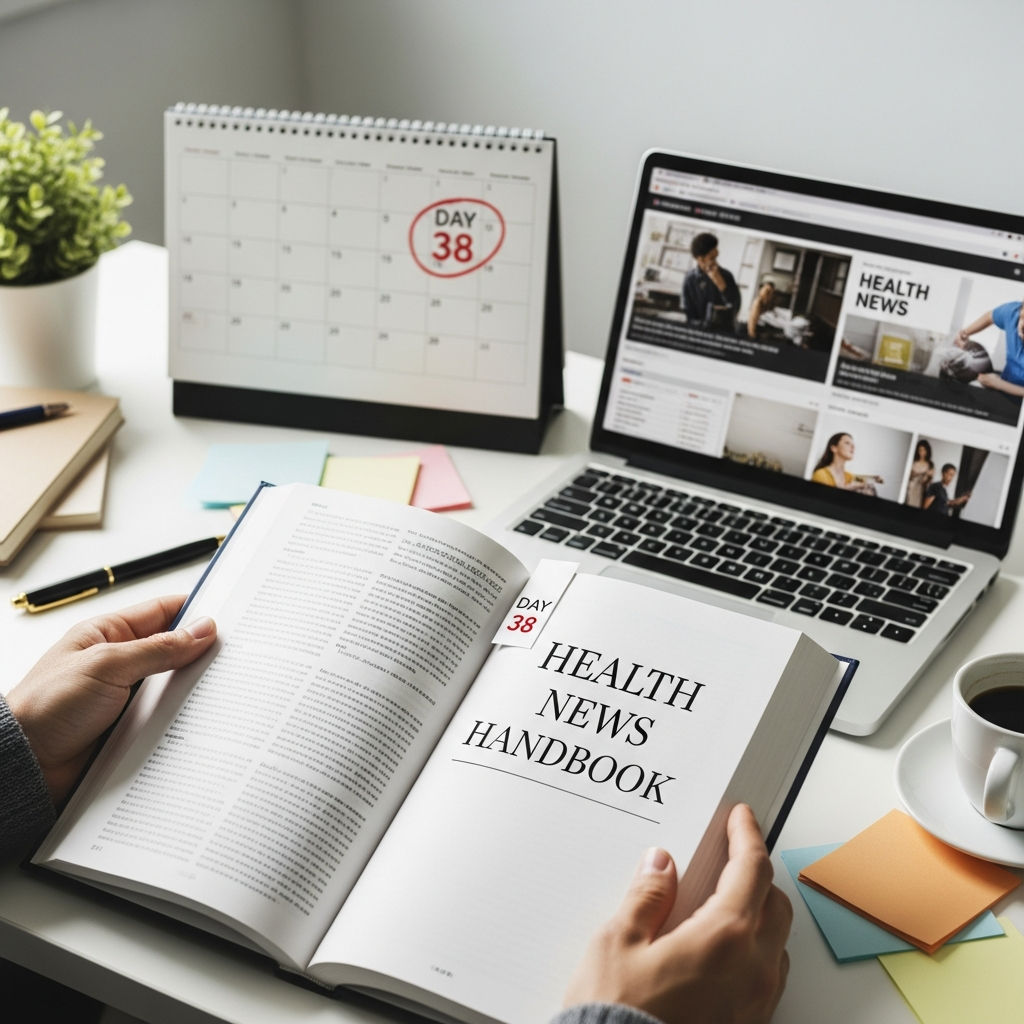
Why 38 days? Research suggests that habit formation and cognitive skill acquisition take time to cement. Over the next five weeks and three days, you can transform from a passive consumer into a critical analyzer of medical information. This guide provides a structured roadmap to achieving health literacy and mastering the complex world of health news.
Phase 1: Building Your Foundation (Days 1–10)
The first ten days are about clearing the clutter and identifying where reliable information actually lives. You cannot master health news if your primary sources are unverified influencers or sensationalist tabloids.
Day 1–3: Identifying Gold-Standard Sources
Start by bookmarking websites that prioritize evidence over clicks. These include:
- Government Health Agencies: The CDC (Centers for Disease Control), the NIH (National Institutes of Health), and the NHS (National Health Service).
- Academic Medical Centers: Mayo Clinic, Harvard Health Publishing, and Johns Hopkins Medicine.
- Global Organizations: The World Health Organization (WHO).
Day 4–7: Understanding the Hierarchy of Evidence
Not all studies are created equal. To master health news, you must understand that a study on ten mice does not carry the same weight as a clinical trial on ten thousand humans. Learn the pyramid of evidence:
- Meta-analyses and Systematic Reviews: The gold standard. They look at all available research on a topic.
- Randomized Controlled Trials (RCTs): High-quality studies that test a specific intervention.
- Observational Studies: Useful for finding links, but cannot prove cause and effect.
- Animal Research and In Vitro Studies: Early-stage research that often doesn’t translate to humans.
Day 8–10: Clearing the Noise
Audit your social media feeds. Unfollow accounts that make “absolute” claims (e.g., “This fruit cures cancer”) or those that sell supplements as a solution to every problem. Mastering health news requires a clean digital environment.
Phase 2: Decoding the Language of Science (Days 11–21)
Health news is often “lost in translation” between the laboratory and the headline. During these eleven days, you will learn the vocabulary used by researchers to describe their findings.
Day 11–14: Correlation vs. Causation
This is the most important distinction in health literacy. Just because two things happen at the same time (correlation) doesn’t mean one caused the other (causation). For example, ice cream sales and shark attacks both rise in the summer, but eating ice cream does not cause shark attacks. Always ask: “Does this study prove cause, or just an association?”
Day 15–18: Absolute vs. Relative Risk
Headlines love relative risk because it sounds dramatic. If a news story says “Eating bacon increases your risk of X cancer by 20%,” that is relative risk. However, if your original risk was only 1%, a 20% increase only moves your absolute risk to 1.2%. Mastering this distinction prevents unnecessary panic.
Day 19–21: The Peer-Review Process
Understand how science is vetted. A “peer-reviewed” study has been scrutinized by independent experts in the field before publication. Be wary of “pre-prints,” which are studies released before this vetting process is complete—a common occurrence during the COVID-19 pandemic.
Phase 3: The Art of Critical Analysis (Days 22–31)
Now that you have the vocabulary, it’s time to apply it to the articles you read daily. This phase focuses on spotting red flags and bias.
Day 22–24: The “Clickbait” Test
Compare the headline of a health article to its content. Often, the headline makes a bold claim that the actual text of the article walks back with phrases like “further research is needed” or “the study was limited to…” If the headline is sensational, approach with extreme caution.
Day 25–27: Investigating Funding and Conflicts of Interest
Who paid for the study? If a study claiming that chocolate improves heart health was funded by a major candy corporation, there is a potential conflict of interest. While it doesn’t automatically mean the data is false, it does mean the results should be viewed with a critical eye.
Day 28–31: Sample Size and Diversity
A study on 20 college-aged men may not apply to a 60-year-old woman. Look for the “n” number (the sample size). Large, diverse sample sizes are much more reliable than small, homogenous ones. Mastering health news means looking for data that represents the general population.
Phase 4: Integration and Habit Building (Days 32–38)
In the final week, you will solidify your skills and create a sustainable routine for staying informed without becoming overwhelmed.
Day 32–34: Using Fact-Checking Tools
Familiarize yourself with sites like HealthNewsReview.org or Snopes’ health section. These organizations do the heavy lifting of debunking viral health myths and grading news stories based on scientific accuracy.
Day 35–36: The “Wait Before You Share” Habit
Before hitting “share” on a shocking health story, spend two minutes searching for the original study. Use Google Scholar or PubMed to see if the study exists and if the news article accurately reflects the findings. This habit makes you a responsible participant in the digital health space.
Day 37–38: Curating Your Personal News Feed
Set up Google Alerts for specific health topics you care about, but limit them to high-quality sources. Subscribe to reputable health newsletters, such as those from the New York Times “Well” section or the Harvard Health Letter. By day 38, your news consumption should be intentional, not accidental.
Why Mastering Health News Matters
Health literacy is more than just an intellectual exercise; it is a protective factor for your physical health. When you can master health news, you gain several key advantages:
- Reduced Anxiety: You will no longer spiral into panic over every sensationalist “health alert.”
- Better Doctor-Patient Conversations: You can bring high-quality information to your appointments and ask more informed questions.
- Financial Savings: You will stop wasting money on “miracle” supplements and unproven treatments that lack scientific backing.
- Empowerment: You become the primary advocate for your own health, grounded in facts rather than fear.
Conclusion: The Lifelong Journey of Health Literacy
While 38 days is enough to build a powerful foundation and change your habits, mastering health news is an ongoing process. Science is not a collection of static facts; it is an evolving methodology. New evidence will emerge, old theories will be debunked, and technologies will change how we consume information.
By following this 38-day plan, you have equipped yourself with the tools to navigate this evolution. You have moved from a place of confusion to a place of clarity. Remember: be skeptical but not cynical, be curious but not gullible, and always look for the data behind the drama. You are now a master of health news.