
36 Quick Tips to Improve Your Health: Small Changes for a Better Life
“`html
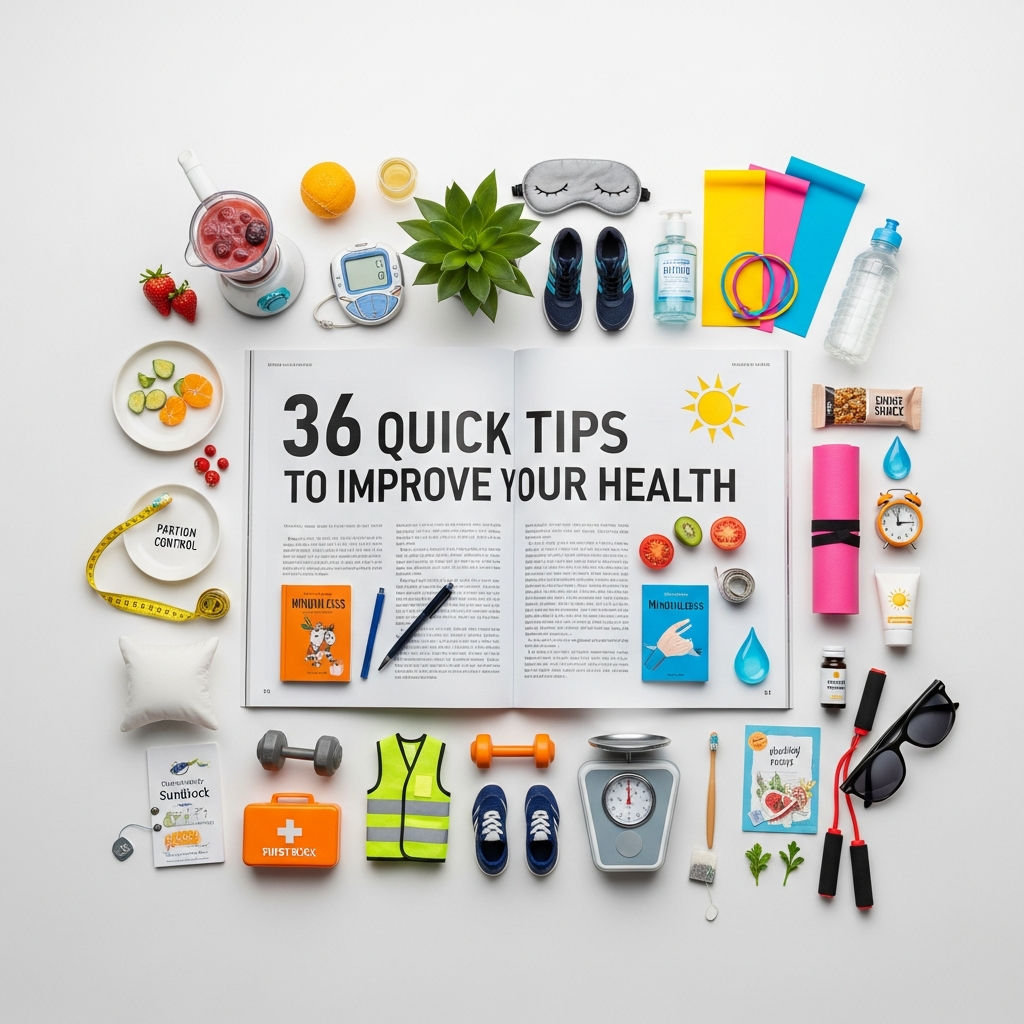
36 Quick Tips to Improve Your Health: Small Changes for a Better Life
In our fast-paced world, the idea of “improving your health” often feels like an overwhelming project. We imagine grueling gym sessions, restrictive diets, and complete lifestyle overhauls. However, science consistently shows that long-term wellness is built on the foundation of small, manageable habits. You don’t need to change everything overnight to see a difference in how you feel.
By implementing “micro-habits,” you can boost your energy, sharpen your mental clarity, and reduce your risk of chronic illness. Whether you are a busy professional or someone just starting their wellness journey, these 36 quick tips to improve your health are designed to fit into even the most crowded schedule.
Physical Movement and Activity
Exercise doesn’t always have to happen in a gym. Incorporating movement into your daily routine keeps your joints limber and your heart healthy.
- 1. Take the stairs: Skip the elevator for two flights to get your heart rate up.
- 2. Park further away: Those extra 200 steps from the back of the parking lot add up over a year.
- 3. The 20-20-20 Rule: Every 20 minutes, look at something 20 feet away for 20 seconds to reduce eye strain.
- 4. Stand while talking: If you’re on a phone call, stand up or pace around the room.
- 5. Stretch for 5 minutes: Do a quick series of stretches every morning to improve circulation.
- 6. Use a basket, not a cart: If you’re only grabbing a few items at the store, carry them to engage your core and arms.
- 7. Take a “fartlek” walk: Incorporate short bursts of fast walking into your usual stroll.
- 8. Calf raises while brushing: Use the two minutes you spend brushing your teeth to do calf raises.
- 9. Practice balance: Stand on one leg while waiting for the microwave to finish.
Nutritional Habits and Hydration
What you put into your body is the fuel for your life. You don’t need to be a chef to eat better; you just need to make smarter choices.
- 10. Drink water first thing: Rehydrate your body with 8 ounces of water immediately after waking up.
- 11. Add one green vegetable: Try to include at least one serving of leafy greens in every meal.
- 12. Use smaller plates: This simple psychological trick helps with portion control without feeling deprived.
- 13. Chew your food 20 times: Slower eating aids digestion and allows your brain to register fullness.
- 14. Swap soda for sparkling water: Get the fizz without the sugar or artificial sweeteners.
- 15. Carry a reusable water bottle: You are more likely to stay hydrated if water is always within reach.
- 16. Read the “Hidden Sugars”: Check labels for ingredients like high fructose corn syrup and maltodextrin.
- 17. Eat the rainbow: Aim for at least three different colors of fruits or vegetables on your plate.
- 18. Pre-portion your snacks: Avoid eating directly from a large bag to prevent mindless overeating.
Mental Health and Emotional Well-being
Mental health is just as critical as physical health. Taking a few minutes for your mind can lower cortisol levels and improve your mood.
- 19. Practice Box Breathing: Inhale for 4, hold for 4, exhale for 4, and hold for 4 to calm the nervous system.
- 20. Write down three gratitudes: Spend two minutes every evening noting three things you are thankful for.
- 21. Sunlight in the morning: Get 10 minutes of natural light early in the day to regulate your circadian rhythm.
- 22. Digital Detox Hour: Turn off all screens 60 minutes before you intend to sleep.
- 23. Learn to say “No”: Protecting your time is a vital part of stress management.
- 24. Connect with a friend: A quick text or a 5-minute call can significantly boost oxytocin levels.
- 25. Practice “Brain Dumping”: Write down everything on your mind before bed to stop racing thoughts.
- 26. Listen to uplifting music: Use sound to shift your mood during a midday slump.
- 27. Spend time in nature: Even five minutes in a park can lower blood pressure.
Sleep and Recovery
Recovery is the most underrated aspect of health. Quality sleep allows your body to repair tissues and consolidate memories.
- 28. Keep the bedroom cool: The ideal temperature for deep sleep is around 65-68°F (18-20°C).
- 29. No caffeine after 2 PM: Caffeine has a long half-life and can disrupt your deep sleep cycles.
- 30. Use a silk eye mask: Blocking out all light helps your brain produce melatonin naturally.
- 31. Stick to a schedule: Go to bed and wake up at the same time, even on weekends.
- 32. Magnesium-rich foods: Eat pumpkin seeds or almonds in the evening to help relax your muscles.
- 33. Keep electronics out of reach: Charge your phone across the room to avoid “doomscrolling” in bed.
General Lifestyle and Longevity
Daily habits and hygiene play a massive role in preventing illness and increasing your lifespan.
- 34. Floss daily: Oral health is directly linked to heart health.
- 35. Wash your hands properly: Scrub for at least 20 seconds to effectively remove pathogens.
- 36. Take a daily probiotic: Gut health is the cornerstone of a strong immune system.
How to Make These Tips Stick
The secret to improving your health isn’t trying to do all 36 of these tips at once. Instead, choose three that feel the easiest to implement today. Once those become second nature (usually after 21 to 30 days), add another two. This process, known as “habit stacking,” allows you to build a skyscraper of health on a solid foundation of simple routines.
Consistency beats intensity every time. It is better to walk for 10 minutes every day than to run for two hours once a month. By focusing on these quick tips, you are signaling to yourself that your well-being is a priority.
Frequently Asked Questions (FAQ)
Which of these tips has the biggest impact?
While all are beneficial, hydration, quality sleep, and consistent movement are the “Big Three” that provide the most noticeable immediate improvements in energy and mood.
How long does it take to see results?
Many people report feeling more energetic within 3 to 7 days of improving their hydration and sleep habits. Physical changes, like weight management or muscle tone, typically take 4 to 6 weeks of consistency.
Can I improve my health without spending money?
Absolutely. The majority of these tips—such as walking, deep breathing, drinking water, and stretching—are completely free. Health is more about your daily choices than expensive supplements or gym memberships.
What if I miss a day?
Don’t fall into the “all or nothing” trap. If you miss a day, simply resume your habit the next day. One “bad” day does not ruin your progress; only giving up does.
Conclusion
Improving your health doesn’t require a miracle or a massive bank account. It requires the willingness to make small, intentional choices every day. By using these 36 quick tips, you can take control of your physical and mental well-being one step at a time. Start today by drinking a glass of water or taking a five-minute walk—your future self will thank you.
“`